








Why Does Traditional Kava Taste Like Mud — And How to Fix It
TL;DR: Traditional kava tastes like mud because preparation extracts everything from the root — the kavalactones (the good stuff) and the bitter plant fibers, resins, and grit (the bad stuff). Every "how to make kava taste better" article tells you to mask it with juice or chasers. That's a workaround, not a fix. The actual fix is extraction technology that isolates kavalactones from the muddy compounds at the processing stage. Dry Shot does this. The result is a kava drink that tastes like what it's supposed to taste like — not dirt.
You've heard the pitch. Non-alcoholic drink that gives you a buzz. Relaxed, social, zero hangover. Sounds perfect.
Then you try it.
And it tastes like someone squeezed a garden hose into your cup.
That's the kava problem in one sip. The effects? Incredible — a real, felt social buzz within 30 minutes. The flavor? Often described as "muddy," "dirty," or (our personal favorite) "dirt with a side of Novocain." For a drink with so much potential, kava has a serious reputation problem. And it's not your palate that's wrong.
Here's what actually causes that earthy, muddy taste — and why it's a solvable problem, not a feature of the plant.
Where the muddy taste comes from
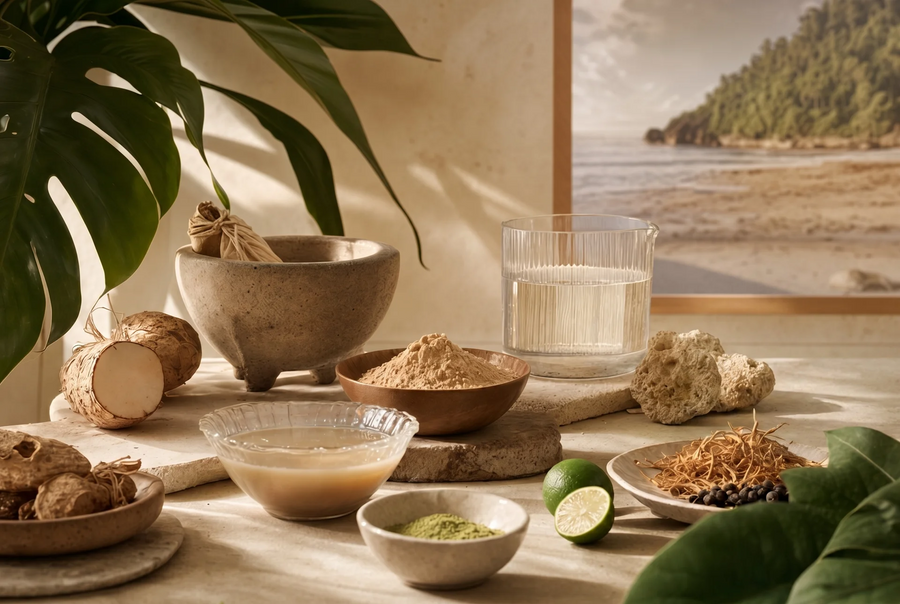
Traditional kava is made from the root of Piper methysticum, a plant native to the South Pacific. For 1,000 years, Pacific Island cultures prepared it the traditional way: chewing, grinding, or pounding the raw root, then mixing it with water and straining through fiber.
The problem? Kava roots contain kavalactones — the compounds responsible for the relaxing, social effects — alongside a bunch of other plant matter. Resins. Fibers. Organic compounds that don't dissolve cleanly. When you mix ground root with water, you're not just extracting the good stuff. You're pulling in the gritty, bitter, dirt-adjacent compounds that make first-timers swear off kava forever.
Traditional straining (cheesecloth, nut milk bags) catches the big chunks. What it doesn't catch: the microscopic sediment, the bitter resins, and the volatile compounds that hit your tongue like a mouthful of backyard soil.
Every "how to make kava taste better" article on the internet will tell you to drown it in pineapple juice or chase it with chocolate milk. That's a workaround, not a fix.
Why masking doesn't cut it
There's a whole industry built around making kava palatable after the fact. Mix with OJ. Add ginger. Throw in a cinnamon stick. Blend it with almond milk. These tricks work — sort of. They coat the problem rather than solve it.
Take a look at the top results for "how to make kava taste better" and you'll find the same advice on repeat: fruit juice, creamer, sweeteners, chasers. It's the kava equivalent of holding your nose and swallowing medicine.
The issue isn't that kava is naturally undrinkable. The issue is that traditional preparation methods are outdated. They were designed for a world before food science existed. We've spent decades perfecting coffee extraction, tea brewing, and alcohol distillation. Kava preparation? Still stuck in "strain it through a sock and hope for the best" territory.
The comparison: old prep vs. new tech
| Traditional Kava Prep | Powder Technology (Dry Shot) | |
|---|---|---|
| Method | Grind whole root, mix with water, strain through cloth | Isolate kavalactones at extraction stage, filter out plant matter |
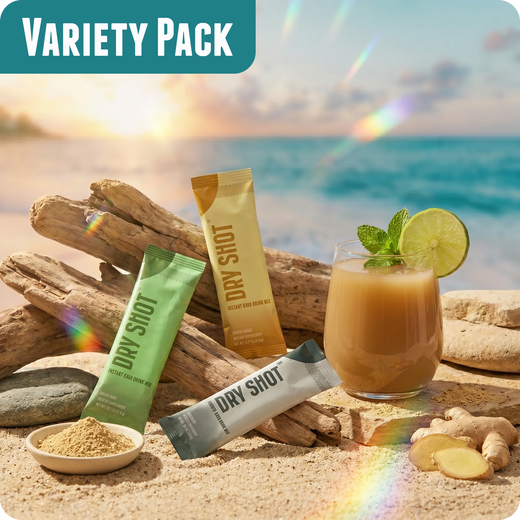
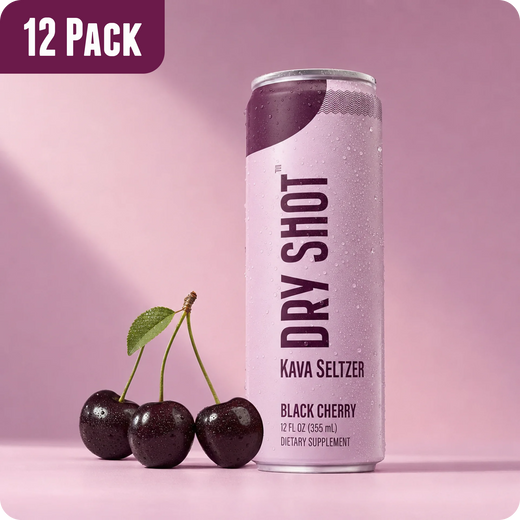
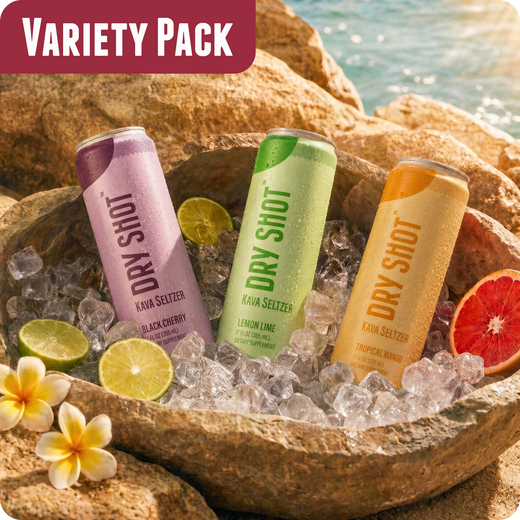
| What you taste | Mud. Dirt. Bitter resins. Grit. | The actual flavor — cherry, ginger, mango. No earthy undertone. |
| What you feel | Kavalactones — social buzz, relaxation, talkativeness | Same kavalactones — social buzz, relaxation, talkativeness |
| Needs a chaser? | Almost always | Never |
| Onset time | 20–30 minutes | 20–30 minutes |
| Reverse tolerance | Yes — effects strengthen with regular use | Yes — same mechanism |
Same kavalactones. Same social buzz. Same 30-minute onset. The only difference is what hits your tongue — and that difference is the entire game.
What changed: GRAS and the technology catch-up
Two things changed recently that make kava worth a second look.
First, the GRAS designation. In December 2025, kava was classified as food and Generally Recognized as Safe (GRAS) in the United States — a regulatory milestone that legitimizes what Pacific Islanders have known for 3,000 years. Kava is safe, effective, and here to stay.
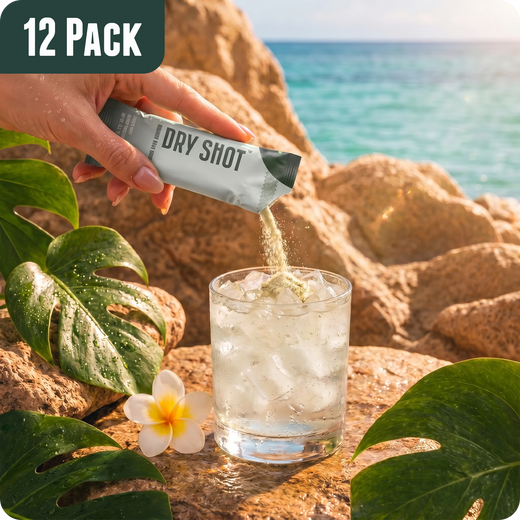
Second, the technology caught up. New processing methods — specifically, proprietary powder technology — extract kavalactones while filtering out the compounds responsible for that muddy taste and texture. Instead of grinding the whole root and struggling to strain it, advanced extraction isolates the active ingredients and leaves the bitterness behind.
The result is a drink that tastes like... well, like what you ordered. Citrus, ginger, maybe a hint of spice. No grit. No dirt. No garden hose.
(Taste great AND feel something. That's the whole point.)
What to look for in a kava drink
If you're shopping for a non-alcoholic drink that gives you a buzz, here's what actually matters:
- Extraction method: Powder-based extraction beats traditional root grinding every time. Look for brands that specify their process.
- Kavalactone content: You want enough to feel it. Anything under 100mg per serving is probably underwhelming. Dry Shot targets a noticeable social buzz with each serve.
- Noble kava source: Not all kava is equal. Noble kava varieties (from Vanuatu, Fiji, Hawaii) have the best safety profile and most consistent effects.
- Ingredients list: Short. Actual flavors, not "natural flavors" that hide artificial nonsense. Less is more.
- Taste first: A kava drink that needs a chaser is a kava drink that didn't solve the problem.
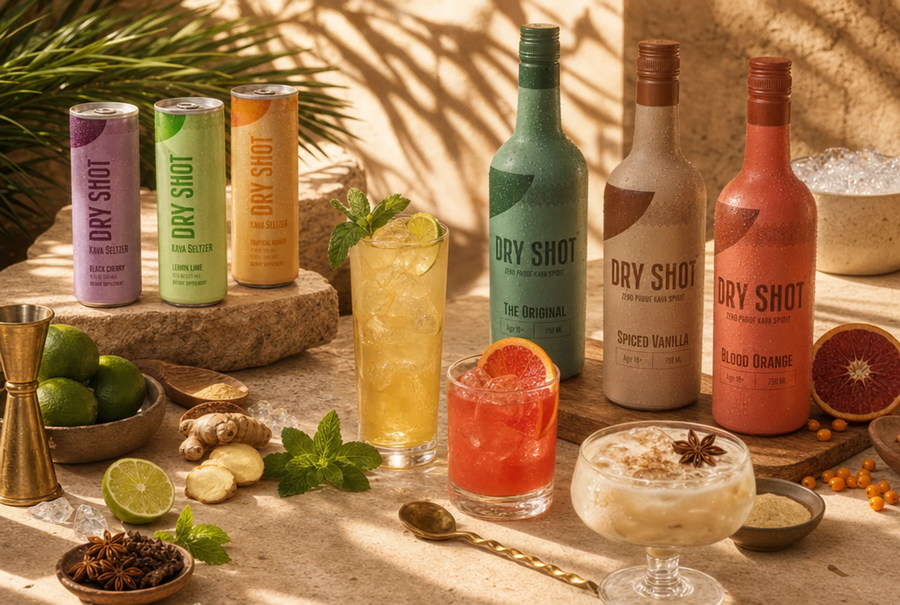
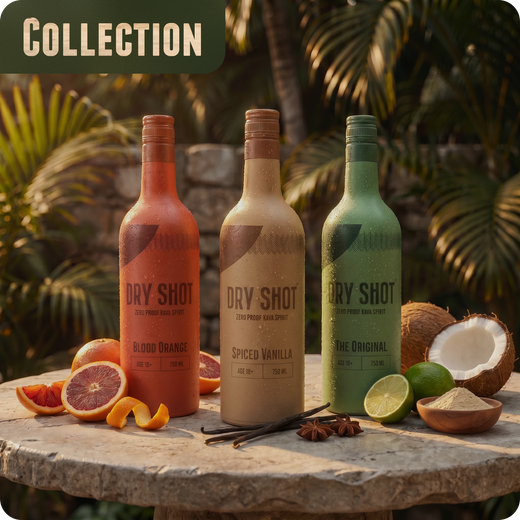
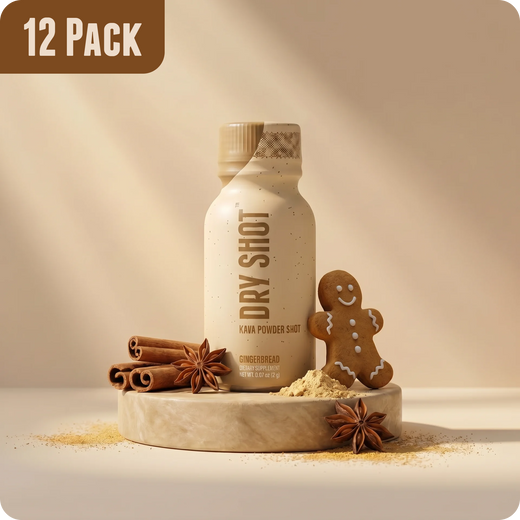
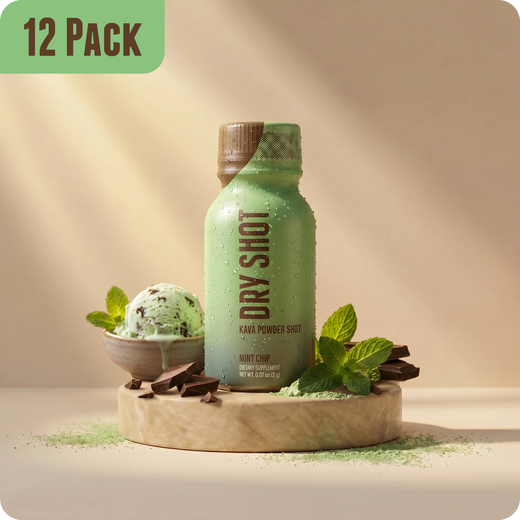
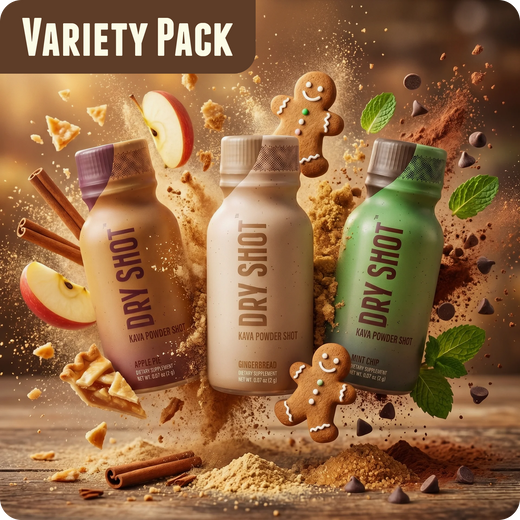
Dry Shot checks every box. Noble kava extract from premium sources. Proprietary powder tech that blocks the muddy taste at the processing level. 0% ABV, zero hangover, and a social buzz that actually hits within 30 minutes.
Actually — it's the first kava drink we've tried that didn't make us reach for a glass of OJ afterward. And that's not because we have a high tolerance for dirt-flavored beverages.
The bottom line
Kava had a taste problem. That problem had a solution. Most people just didn't know it existed yet.
If you've tried kava before and couldn't get past the flavor, you weren't wrong. The preparation method was. Now there's a better way — one that gives you the buzz without the mud.
Try it. Your taste buds will thank you. Your head will feel fantastic. And you won't need to chase it with anything.
Shop Dry Shot — taste the difference.
Frequently asked questions
Does all kava taste like mud? Traditional kava prepared from raw root powder? Usually yes. Modern kava made with extraction technology? No. The muddy taste comes from plant fibers and bitter resins that can be filtered out during processing. If your kava tastes like dirt, it's the preparation method — not the plant.
What exactly is proprietary powder technology? It's a processing method that isolates kavalactones (the active compounds that produce kava's effects) from the bitter, gritty plant matter that gives traditional kava its muddy taste. Think of it as the difference between chewing coffee beans and drinking a pour-over. Same caffeine. Different experience.
How much kava should I drink to feel the buzz? Start with one serving. Kava has a reverse tolerance effect — it actually works better the more regularly you drink it. For most people, one serving of Dry Shot produces a noticeable social buzz within 20 to 30 minutes.
Is kava safe? Yes. Noble kava was classified as Generally Recognized as Safe (GRAS) by the FDA in December 2025. It has been consumed safely in Pacific Island cultures for over 3,000 years. Stick to noble varieties and follow serving guidelines.
Can I mix kava with alcohol? Not recommended. Both kava and alcohol are metabolized by the liver, and combining them can amplify effects unpredictably. Most people use kava as a replacement for alcohol, not alongside it. If you mix, keep it light and occasional.
What about the THC ban — does that affect kava? No. Kava is completely distinct from THC and cannabis. The November 2026 THC ban affects hemp-derived THC beverages, not kava. If anything, kava is the logical alternative for people losing access to THC drinks — same social buzz, no legal gray area.
Sources
- World Health Organization. (2007). Assessment of the risk of hepatotoxicity with kava products.
- Lebot, V., et al. (1992). Kava: The Pacific Elixir. University of Rochester Press.
- National Center for Complementary and Integrative Health (NCCIH). Kava fact sheet.
- U.S. Food and Drug Administration. (2025). Kava GRAS designation.
- Sarris, J., et al. (2013). Kava in the treatment of generalized anxiety disorder. Journal of Clinical Psychopharmacology, 33(5), 643–648.
Dry Shot products are not intended to diagnose, treat, cure, or prevent any disease.
Keep Reading
- What Is Kava? The Complete Guide to Kava Drinks & Effects
- What Does Kava Do? Effects, Benefits & What to Expect
- What Is a Kava Drink? Everything You Need to Know
- Kava vs Alcohol: What Actually Happens When You Make the Change
- Best Kava Drink: What to Look For and Which Ones Actually Deliver
- Where Can I Buy a Kava Drink? Your Complete Guide to Finding Good Kava
- Does Kava Give You a Hangover? The Honest Answer
- Kava vs. Ashwagandha: Effects, Onset, and Which One You Actually Need
- Is Kava Safe? What the Research Actually Says
- Kava Benefits: What Science Says About Kava's Effects
- Kava Side Effects: What to Watch For and How to Drink Safely
- What Does Kava Feel Like? The Actual Experience Start to Finish
- Kava Seltzer: What It Is and How It Works
- Kava Shot: What It Is and Where to Get the Good Ones
- Sober Curious? Kava Drinks Are the Social Buzz Without the Alcohol
- What Bartenders Need To Know About Kava
- Shop All Kava Drinks