







Kava vs Alcohol: What Actually Happens When You Make the Change
TL;DR: Kava and alcohol both produce a felt, social effect within 15 to 30 minutes. That's where the similarity ends. Alcohol impairs you, builds dependence, and gives you a hangover. Kava relaxes you, makes you talkative, and leaves you clear-headed. Alcohol damages your liver with chronic use. Kava was classified as food and GRAS by the FDA in December 2025. If you want a drink that does the social job without the tax, kava is the better drink. Full stop.
People have been drinking kava for social reasons for 3,000 years. People have been drinking alcohol for social reasons for almost as long. So why does one feel like the life of the party and the other feels like... a wellness supplement?
Because most kava tastes like mud. And most people have never had good kava.
This is the actual comparison: kava vs alcohol, what each does to your body, how fast you feel it, and why one of them is quietly becoming the default social drink for people who want the buzz without the regret.
The comparison table
| Alcohol | Kava | |
|---|---|---|
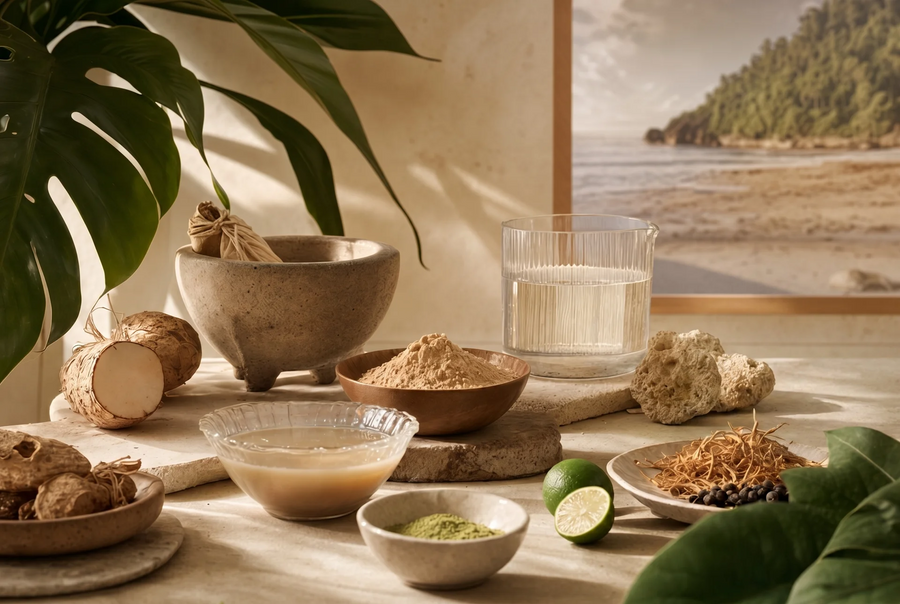
| What it is | Ethanol — a central nervous system depressant produced by fermenting sugars | Kavalactones — active compounds from the root of Piper methysticum (South Pacific pepper plant) |
| Primary mechanism | Broad CNS depression — affects GABA, dopamine, glutamate simultaneously | Selective GABA modulation — promotes relaxation without broad CNS depression |
| Time to feel it | 15–30 minutes | 20–30 minutes |
| Peak effect | 30–90 minutes | 45–90 minutes |
| Duration | 2–4 hours | 2–3 hours |
| Impairment | Yes, progressive — slurred speech, loss of coordination, foggy judgment | None at standard doses — you stay sharp, hold a conversation, drive home |
| Next day | Hangover — headache, nausea, brain fog, regret | Clear — no hangover, no fog, no regret |
| Effect progression | Keeps building — the more you drink, the more impaired you get | Plateaus — effects level off, you don't keep getting more impaired |
| Addiction risk | High — alcohol is one of the most addictive substances widely available | None documented — no physical dependence, no withdrawal pattern |
| Calories | High — ~150 per beer, ~120 per glass of wine, ~100 per shot of spirits | Low — kava itself is near-zero calorie |
| Long-term health | Linked to liver disease, several cancers, cognitive decline, addiction | GRAS-designated (Dec 2025). 3,000-year safety record with water-based noble kava preparations |
| Drug test | Can trigger positives (ethyl glucuronide tests) | Does not show up on any standard drug test |
| Legal status | Legal, age-restricted (21+), location-restricted | Legal in all U.S. states, no age restriction on purchase, classified as food |
How each one actually feels
Alcohol hits in about 15 to 30 minutes. First comes the warm looseness, then the talkativeness, then the gradual loss of coordination and judgment. Keep going and you get slurred speech, foggy memory, and a morning you regret. The effect keeps building — the more you drink, the more impaired you become. There's no plateau until you pass out.
Kava hits in 20 to 30 minutes. You feel a calm, clear alertness. Sociability. A gentle body relaxation. You stay sharp — you can hold a conversation, drive home, remember the night. The effect plateaus. You don't keep getting more impaired the more you drink. People describe feeling more talkative, confident, and outgoing. More fun, without losing the plot.
The difference is not subtle. Alcohol takes something away from you as it gives you something. Kava does not.
Both kava and alcohol interact with GABA — the brain's primary calming neurotransmitter. But kavalactones modulate GABA receptor sensitivity selectively, producing relaxation without the broad central nervous system depression that ethanol causes. No slurred speech. No loss of motor control. No fog.
The health difference
This is where the comparison stops being close.
Chronic alcohol use is linked to liver disease, several cancers, cognitive decline, and addiction. It is one of the leading preventable causes of death worldwide. That's not opinion — it's settled public health.
Kava has been consumed safely across the Pacific Islands for 3,000 years. In December 2025, kava was classified as food and Generally Recognized as Safe (GRAS) in the United States. The WHO's 2007 assessment reviewed the safety literature and found no evidence of hepatotoxicity from traditional water-extracted noble kava.
There is one honest caveat: heavy, daily kava consumption on top of alcohol can stress the liver. Used as a social drink, on its own, kava does not carry the health burden alcohol does. If you take prescription medication, check with your doctor — kava can interact with some drugs.
The social function nobody talks about
Alcohol's real value is not the buzz. It's the social ritual.
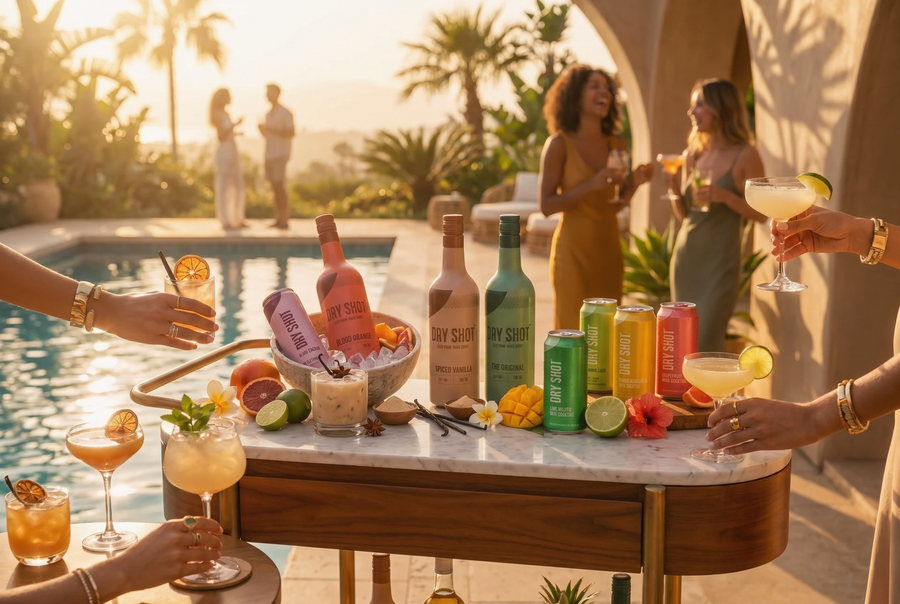
The drink in your hand at a party. The toast. The round bought for friends. The excuse to gather. Kava has the same ritual in the Pacific Islands — the kava ceremony, the shared bowl, the gathering. The same social function, minus the damage.
That's why kava is showing up in real bars now, not just kava bars. It does the social job. The buzz is real and felt. The flavor is the only thing that has been holding it back — and that's a solvable problem.
Why most people haven't tried kava yet
Two reasons.
One: traditional kava tastes like muddy water. Earthy, bitter, rooty. That taste is the single biggest barrier to kava going mainstream. People want the buzz; they don't want to choke down dirt.
Two: most kava products are either loose powder you have to strain yourself, or weak extracts that feel like nothing.
That's exactly the gap worth solving. A kava drink that tastes genuinely good and delivers a real, felt social buzz changes the category. Not a wellness tonic. Not a flavored water. A social drink that actually does something.
Kava vs alcohol: the bottom line
If you're deciding what to drink tonight, here's the honest version.
Alcohol gives you a buzz, takes away your judgment, and punishes you the next morning. Kava gives you a buzz, keeps you sharp, and lets you wake up fine. Both are social. Both are felt. One of them costs you something every time.
You don't have to quit alcohol to try kava. You just have to want a drink that does the social job without the tax. That's the whole pitch.
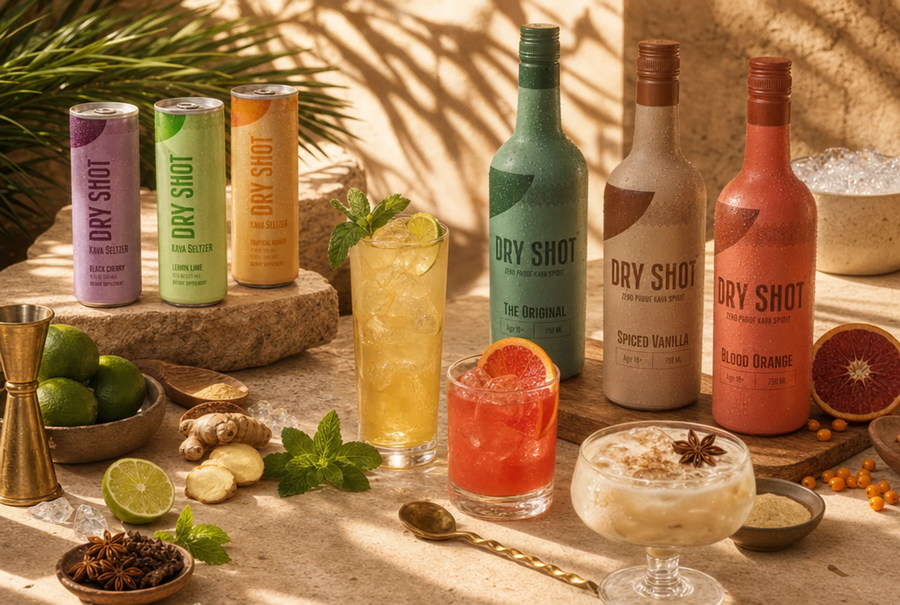
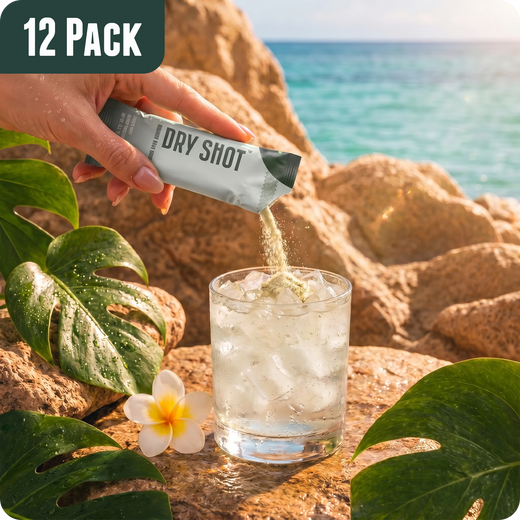
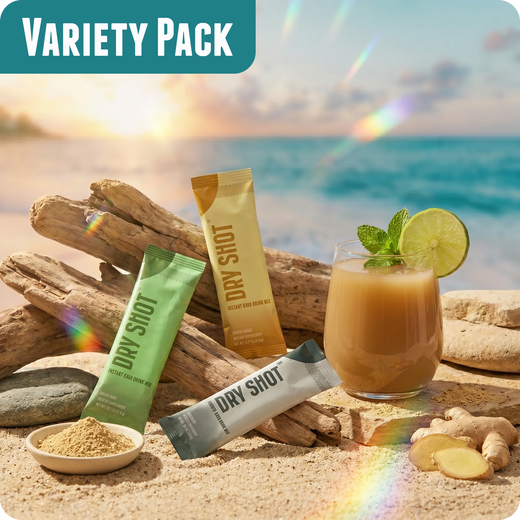
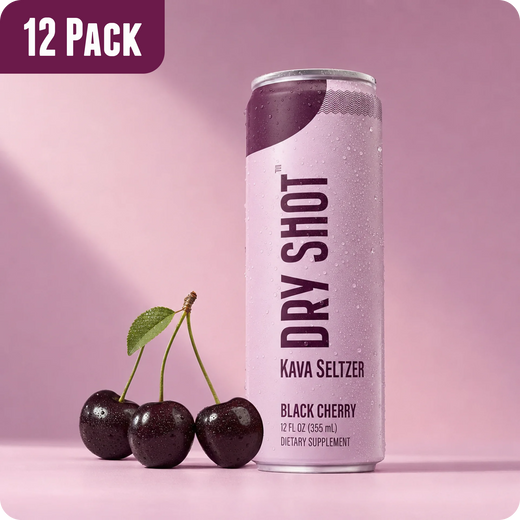
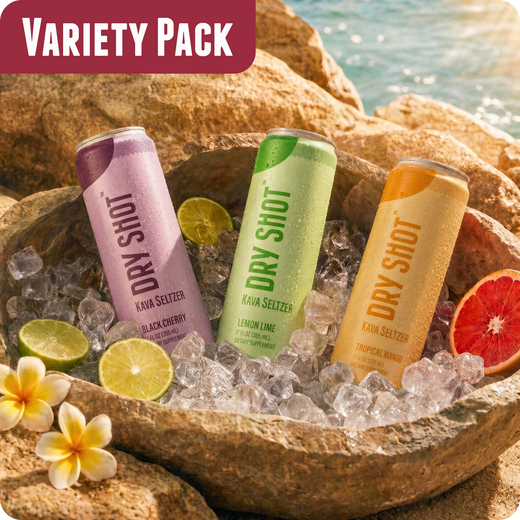
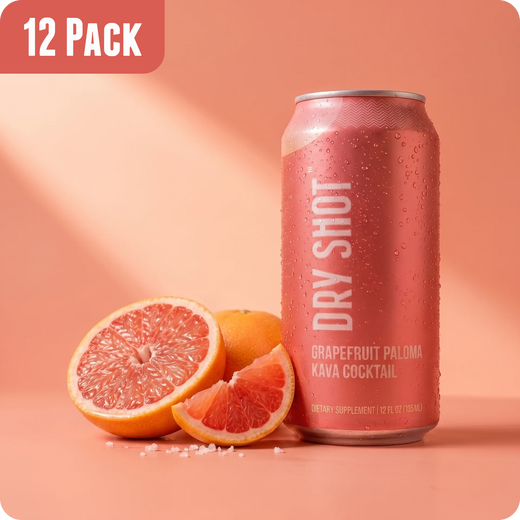
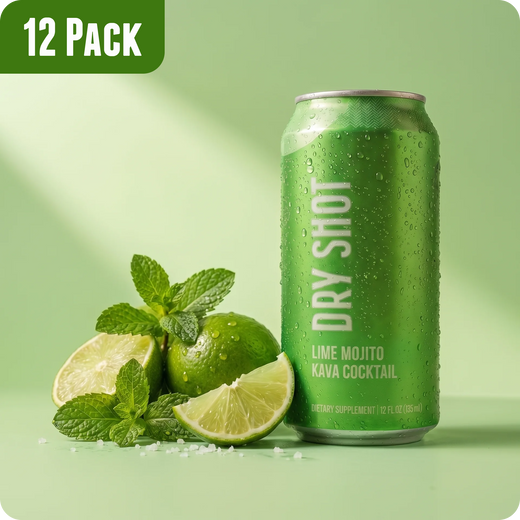
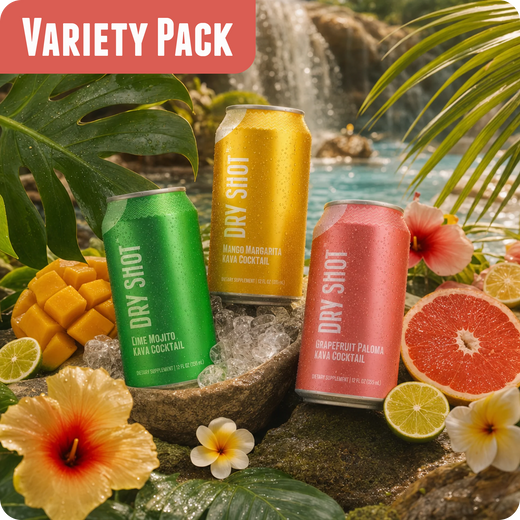
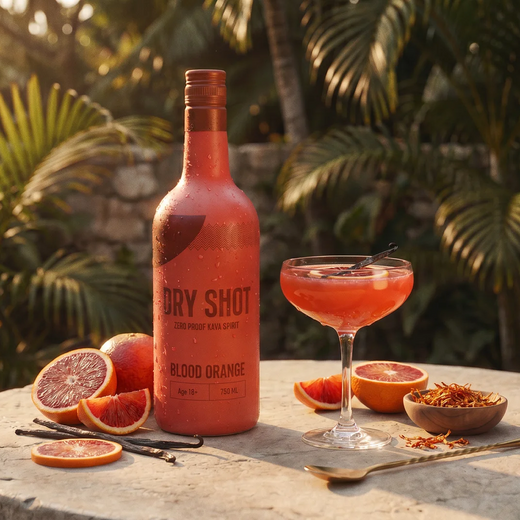
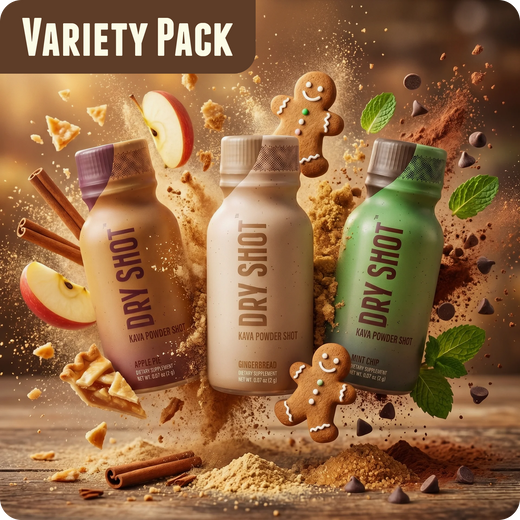
Shop Dry Shot — the social buzz without the regret.
Frequently asked questions
Does kava give you a buzz like alcohol? Yes, a real one. Kava produces a felt, social effect within 20 to 30 minutes — talkativeness, calm, confidence, sociability. The difference is it leaves you clear-headed with no hangover. You get the buzz without the impairment.
Can you replace alcohol with kava? Many people do. Kava fills the social ritual and the felt effect of alcohol without the impairment, fog, or next-day cost. People who want to cut back or quit alcohol often use kava as their social drink.
Is kava safer than alcohol? Used as a social drink, yes. Kava was classified as food and Generally Recognized as Safe (GRAS) by the FDA in December 2025. Chronic alcohol use carries serious health risks including liver disease, several cancers, and addiction. Kava does not carry the same burden. Check with your doctor if you take prescription medication.
How long does kava last compared to alcohol? Both peak in under 90 minutes and last 2 to 4 hours. Kava's effect tends to plateau rather than keep building, so you don't get progressively impaired the way you do with alcohol.
Does kava have calories like alcohol? Kava itself is very low calorie. Prepared kava drinks are lighter than most alcoholic drinks, which are calorie-dense. A kava seltzer or cocktail typically has fewer calories than a comparable alcoholic drink.
Will kava show up on a drug test? No. Kava is not a drug and is not screened for on standard drug tests. It is legal in all U.S. states and classified as food.
Can you drink kava and alcohol together? You can, but it's not recommended. Both kava and alcohol are metabolized by the liver, and combining them can stress it. Most people use kava as a replacement for alcohol, not alongside it. If you mix, keep it light and occasional.
Sources
- Sarris, J., et al. (2013). Kava in the treatment of generalized anxiety disorder. Journal of Clinical Psychopharmacology, 33(5), 643–648.
- World Health Organization. (2007). Assessment of the risk of hepatotoxicity with kava products.
- National Center for Complementary and Integrative Health (NCCIH). Kava fact sheet.
- U.S. Food and Drug Administration. (2025). Kava GRAS designation.
- World Health Organization. Global status report on alcohol and health.
- National Institute on Alcohol Abuse and Alcoholism (NIAAA). Alcohol facts and statistics.
Dry Shot products are not intended to diagnose, treat, cure, or prevent any disease.
Keep Reading
- What Is Kava? The Complete Guide to Kava Drinks & Effects
- What Does Kava Do? Effects, Benefits & What to Expect
- What Is a Kava Drink? Everything You Need to Know
- Why Does Traditional Kava Taste Like Mud — And How to Fix It
- Best Kava Drink: What to Look For and Which Ones Actually Deliver
- Where Can I Buy a Kava Drink? Your Complete Guide to Finding Good Kava
- Does Kava Give You a Hangover? The Honest Answer
- Kava vs. Ashwagandha: Effects, Onset, and Which One You Actually Need
- Is Kava Safe? What the Research Actually Says
- Kava Benefits: What Science Says About Kava's Effects
- Kava Side Effects: What to Watch For and How to Drink Safely
- What Does Kava Feel Like? The Actual Experience Start to Finish
- Kava Seltzer: What It Is and How It Works
- Kava Shot: What It Is and Where to Get the Good Ones
- Sober Curious? Kava Drinks Are the Social Buzz Without the Alcohol
- What Bartenders Need To Know About Kava
- Shop All Kava Drinks