








What Is Kava? The Complete Guide to Kava Drinks & Effects
TL;DR: Kava is a root from the South Pacific that's been brewed into a social drink for 3,000+ years. It produces a calming, mood-lifting buzz — relaxed, talkative, and clear-headed — without the impairment or hangover of alcohol. Today, kava is going mainstream as the leading alcohol alternative, and Dry Shot has solved its one historic drawback: the muddy taste.
If you've heard the word "kava" floating around — at a kava bar, in a wellness article, from a friend who quit drinking — you're probably wondering: what is kava, exactly? Is it tea? Is it a supplement? Does it actually do anything?
The short answer: kava is a plant root from the South Pacific that makes you feel calm, social, and genuinely good — a real buzz, not a placebo. It's been used for thousands of years in Fiji, Vanuatu, Tonga, and Samoa as a communal drink. Now it's arriving in the U.S. as the most promising alcohol alternative on the market.
Here's the complete guide: what kava is, what it does, where it comes from, how it's made, whether it's safe, and why it's suddenly everywhere.
What Is Kava? The Basics
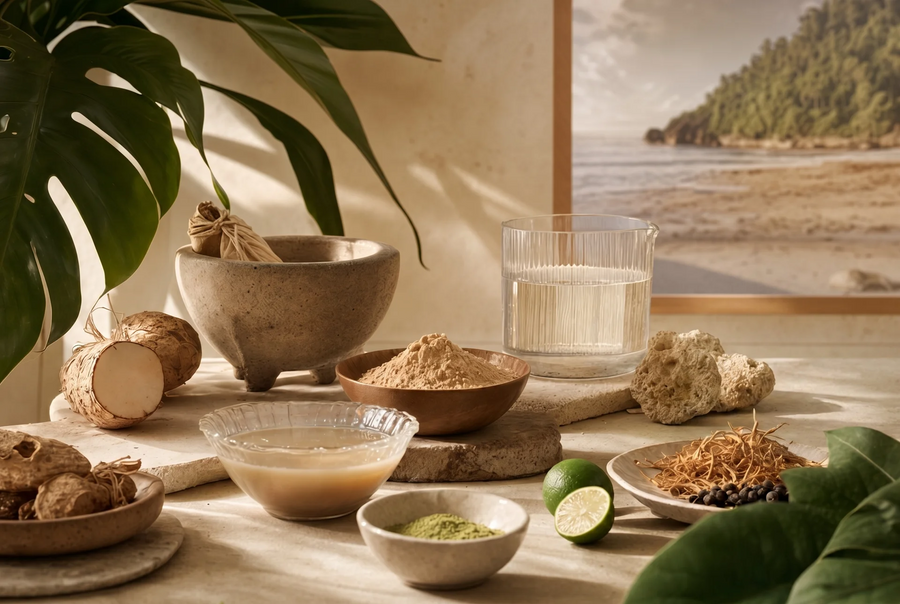
Kava (scientific name Piper methysticum, meaning "intoxicating pepper") is a plant in the pepper family, native to the islands of the South Pacific. The root of the kava plant contains active compounds called kavalactones, which are responsible for kava's effects on the brain and body.
Traditionally, kava root is ground up, mixed with water, kneaded, and strained to produce a muddy-looking liquid that's consumed in group settings — ceremonies, social gatherings, conflict resolution, and community events. The drink has a mildly numbing effect on the mouth and tongue, followed by a wave of calm, talkative relaxation.
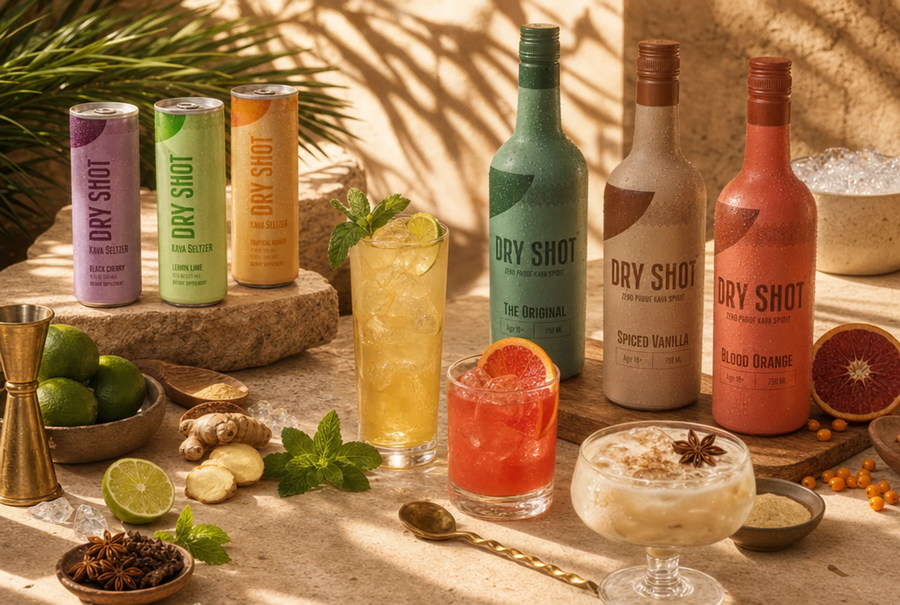
In the modern U.S. market, kava comes in several forms:
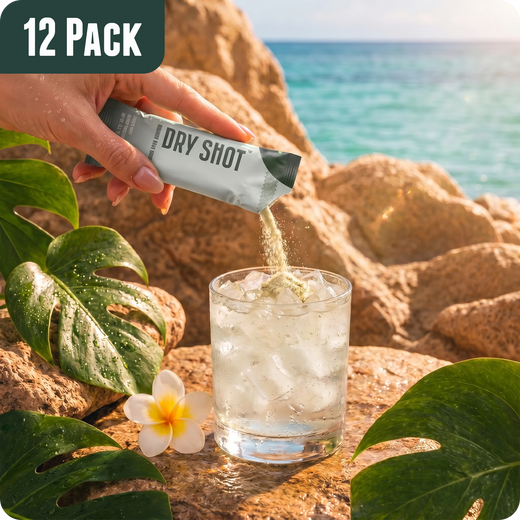
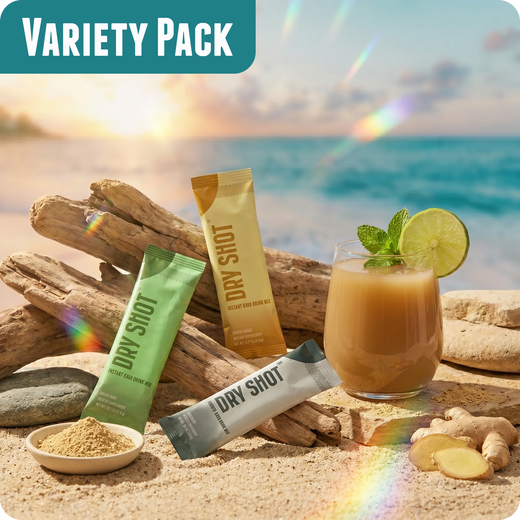
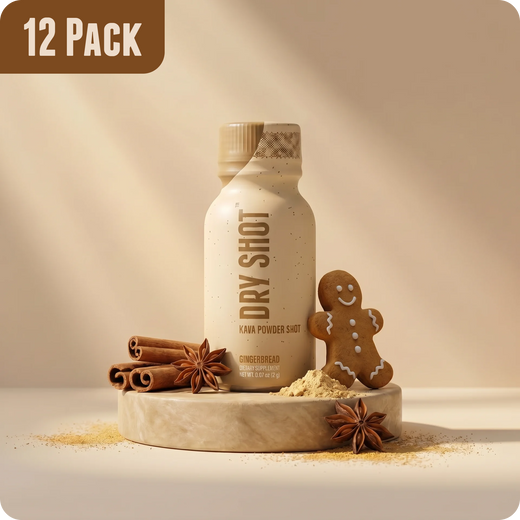
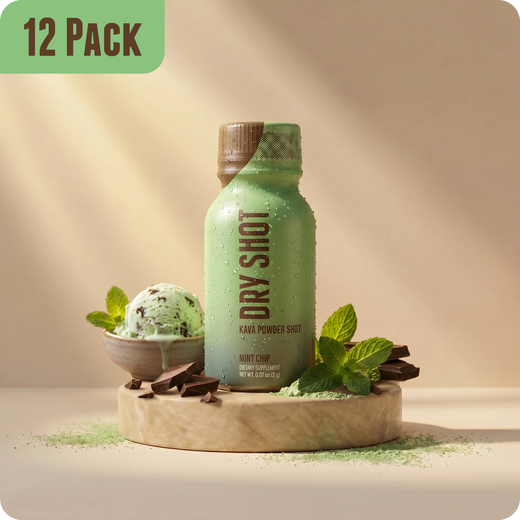
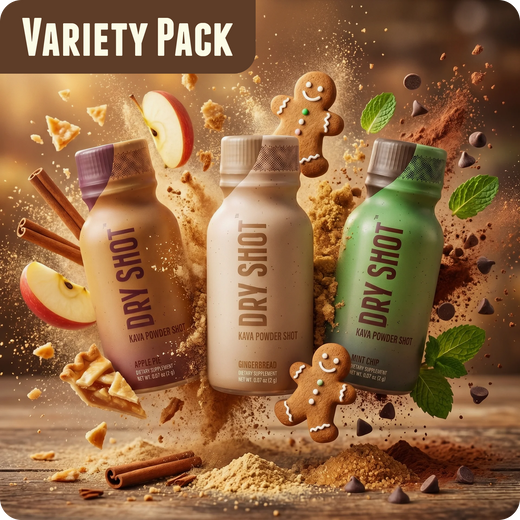
- Instant powder drink mixes — dissolve in water, ready in seconds (this is what Dry Shot makes)
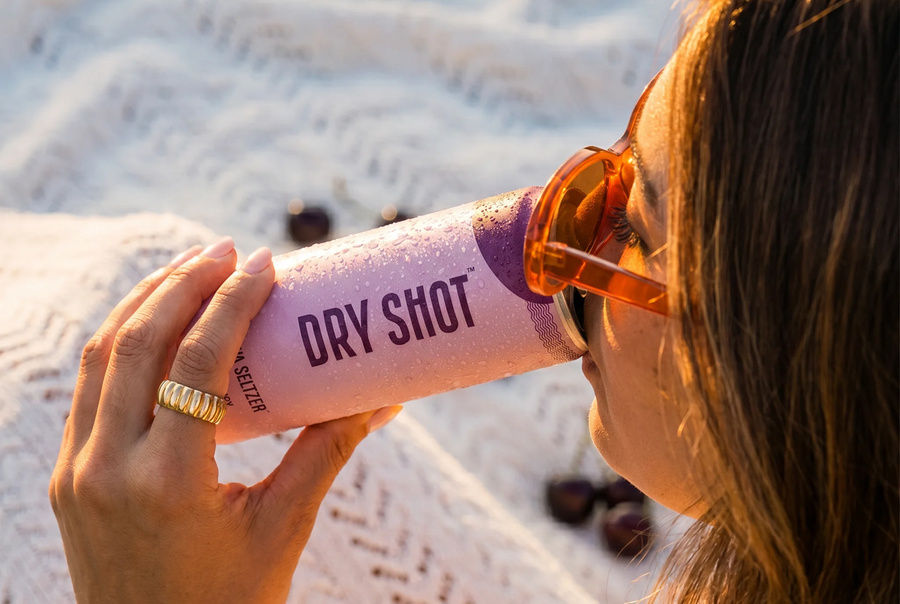
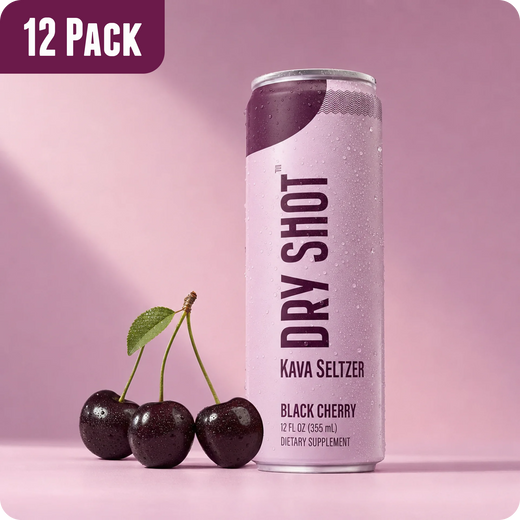
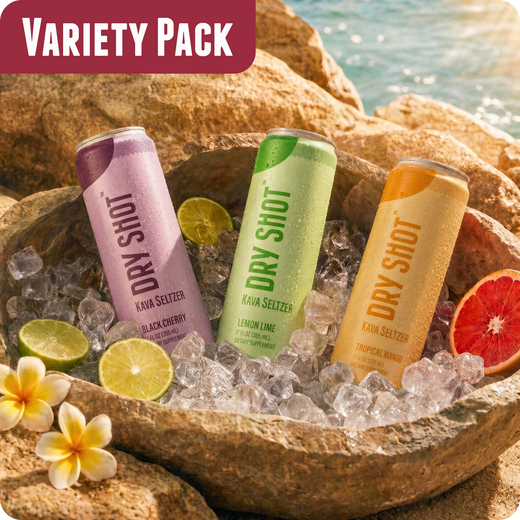
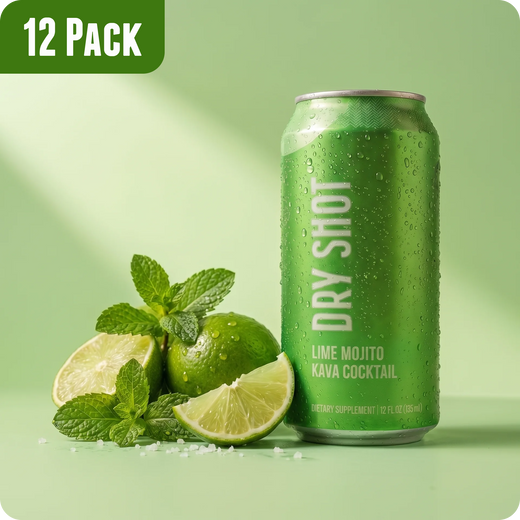
- Kava seltzers — sparkling canned drinks with kava extract
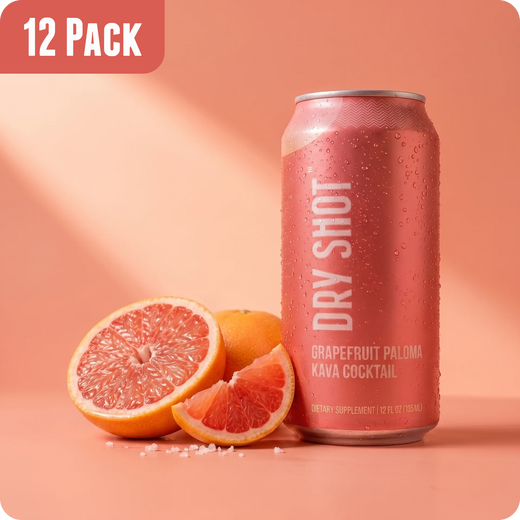
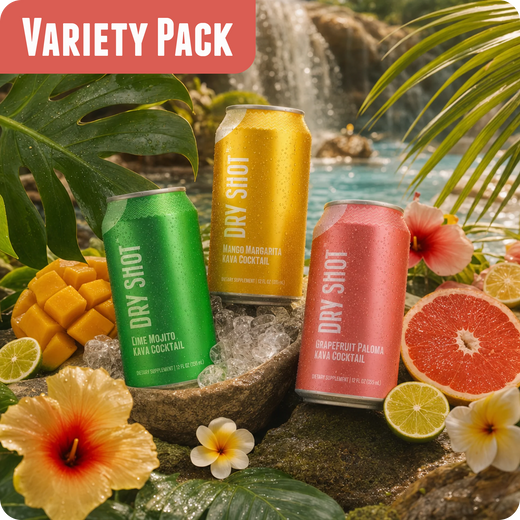
- Ready-to-drink (RTD) kava cocktails — pre-mixed cocktail-style beverages
- Kava concentrates and tinctures — liquid kava extract
- Traditional kava root — the old-school way, requiring preparation
What Does Kava Do?
Kava produces a distinctive effect that's hard to compare to anything else. The best description: alcohol's greatest hits without the hangover. You feel:
- Calm and relaxed, but alert — not drowsy
- More social, talkative, and at ease
- A warm, pleasant physical sensation
- Mild euphoria and elevated mood
- Reduced anxiety and stress
- Clear-headed — no fog, no impairment
The effects kick in within 20-30 minutes and last 2-3 hours. Unlike alcohol, kava plateaus — you reach a pleasant state and stay there. There's no progressive impairment with each drink. For a full breakdown, see our What Does Kava Do? guide.
How Does Kava Work? The Science
Kava's effects come from kavalactones — a group of six primary active compounds found in the kava root. The six major kavalactones are:
- Kavain
- Dihydrokavain
- Methysticin
- Dihydromethysticin
- Yangonin
- Desmethoxyyangonin
These compounds work primarily by interacting with GABA receptors in the brain — the same calming pathway that alcohol, valium, and other anti-anxiety medications target. But kava does this more selectively: it produces relaxation and mood elevation without the loss of coordination, memory impairment, or addictive potential of those other substances.
Kavalactones also affect dopamine and serotonin pathways, which explains the mood-lifting and mildly euphoric effects. The result is a unique state of relaxed alertness that users often describe as "the best version of yourself after one drink" — sustained for hours.
Where Does Kava Come From?
Kava has been cultivated and consumed in the South Pacific for over 3,000 years. The main kava-growing regions include:
- Vanuatu — considered the birthplace of kava, with the most diverse varieties
- Fiji — where kava (called "yaqona") is the national drink and deeply embedded in daily life
- Tonga — where kava ("'ava") ceremonies are central to cultural and political life
- Samoa — where kava ("'ava") is used in both formal ceremonies and casual social settings
- Hawaii — where kava ("'awa") has been cultivated since Polynesian settlement
In these cultures, kava is far more than a recreational drink. It's used for conflict resolution, chiefly ceremonies, welcoming guests, marking important occasions, and simply unwinding with friends at the end of the day. The communal aspect — sitting in a circle, sharing a bowl, talking — is inseparable from the kava experience.
Dry Shot sources exclusively noble kava — the highest quality variety, traditionally cultivated and harvested at peak maturity. Noble kava is distinguished from "tudei" (two-day) kava, which is lower quality and can cause unpleasant effects. All Dry Shot products use only noble kava varieties.
Kava vs Alcohol: What's the Difference?
This is the question driving kava's growth in the U.S. People want the social ritual and the buzz of drinking without the consequences. Here's how kava compares:
| Factor | Kava | Alcohol |
|---|---|---|
| Feeling | Calm, social, clear-headed | Relaxed, then impaired |
| Motor impairment | None | Progressive |
| Hangover | None | Yes |
| Addiction potential | Very low | High |
| Liver toxicity | Minimal (noble kava, responsible use) | Significant |
| Calories | Very low | 7 cal/g |
| Legal age | 18+ (varies by state) | 21+ |
For the full comparison, see Kava vs Alcohol: Which Is Better?
Is Kava Safe?
Kava has an excellent safety profile when used responsibly. Key facts:
- The U.S. FDA classified kava as GRAS (Generally Recognized as Safe) in December 2025
- Kava has been consumed safely in the South Pacific for over 3,000 years
- Clinical studies show kava is effective for anxiety with minimal side effects
- Kava is not physically addictive — no dependency or withdrawal
- The main safety rule: use noble kava only and avoid daily heavy consumption for months on end
People who should consult a doctor before using kava: pregnant or nursing women, people with liver conditions, and anyone taking medications that affect the liver. Kava should not be combined with alcohol or benzodiazepines.
The Kava Taste Problem (And How Dry Shot Solved It)
If kava is so great, why hasn't it gone mainstream already? One word: taste.
Traditional kava tastes like mud. Earthy, bitter, gritty. It's the #1 reason people try kava once and never go back. For 3,000 years, Pacific Islanders have accepted this as part of the experience. But for kava to break through in the U.S. — where consumers expect their functional drinks to actually taste good — the taste had to be solved.
Dry Shot solved it. Our proprietary powder technology blocks the muddy, rooty flavor at the molecular level while preserving the complete kavalactone profile. You get the full kava effect — the calm, the buzz, the social ease — in flavors that taste genuinely good. Spiced Ginger, Mojito Mint, Black Cherry seltzer, Grapefruit Paloma cocktail. No holding your nose. No choking it down.
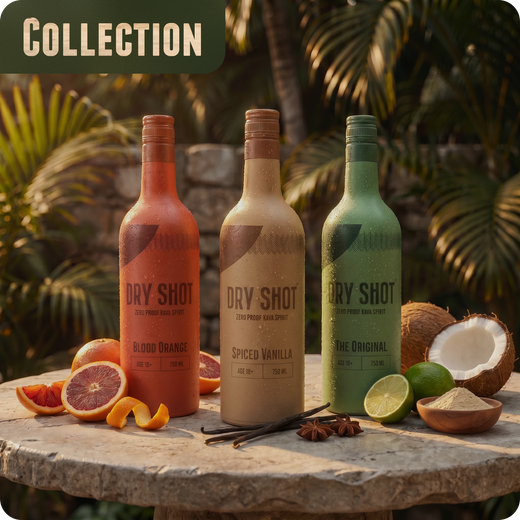
This is why Dry Shot exists: to take kava mainstream by making it something people actually want to drink. Explore the full collection.
Why Kava Is Trending Now
Several forces are converging to make kava's moment right now:
- The THC ban (November 2026): Hemp-derived THC products are being banned, leaving millions of consumers looking for a legal alternative that actually produces a felt effect. Kava fills that gap.
- The sober-curious movement: Younger demographics are drinking less alcohol but still want a social ritual and a buzz. Kava delivers both.
- Kava bar expansion: Kava bars are opening across Florida and spreading nationally, creating a physical infrastructure and community around kava culture.
- GRAS classification: The FDA's December 2025 GRAS designation gave kava regulatory legitimacy, opening doors for mainstream retail and distribution.
- Wellness culture: Consumers are increasingly seeking natural, plant-based alternatives to pharmaceuticals for stress and anxiety. Kava is one of the most clinically-supported natural anxiolytics.
How to Drink Kava
The easiest way to start with kava is with a modern format like Dry Shot's instant powder drink mixes. Here's how:
- Choose your format: Instant powder (dissolve in water), seltzer (ready to drink), or RTD cocktail (ready to drink).
- Start with one serving: Mix one packet of Dry Shot instant powder into 8-12 oz of cold water, or crack open a seltzer or cocktail.
- Drink on an empty stomach for fastest onset (20-30 minutes). After food, allow 45 minutes.
- Wait and feel: The effect builds gradually. You'll notice a shift in mood and physical relaxation within 20-30 minutes.
- Adjust: If one serving doesn't produce the desired effect, try a second after 45 minutes. Kava has a "reverse tolerance" effect for some people — the more consistently you drink it, the more pronounced the effects become.
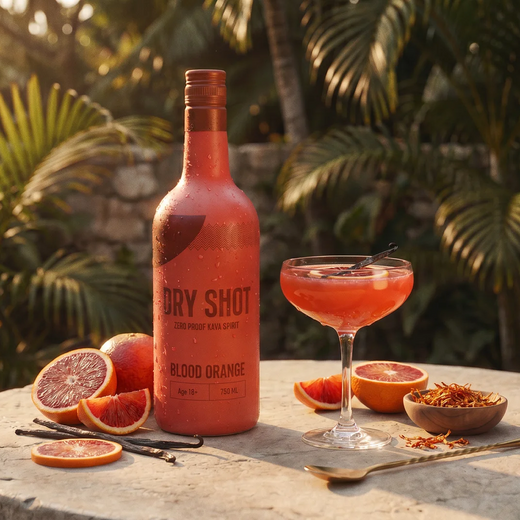
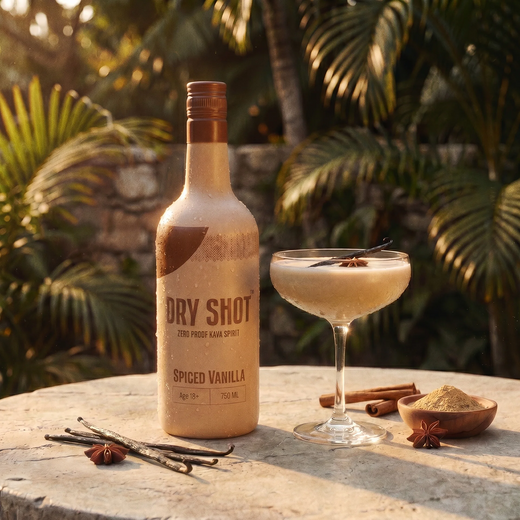
Browse Dry Shot's kava drinks to find your format — instant powders, seltzers, cocktails, and premium spirits, all with zero muddy taste.
Frequently Asked Questions
What is kava made from? Kava is made from the root of the Piper methysticum plant, a member of the pepper family native to the South Pacific. The root is ground and processed to extract kavalactones, the active compounds responsible for kava's calming, mood-lifting effects. Modern kava drinks use instant powder, extracts, or concentrates derived from the root.
Is kava legal in the US? Yes, kava is legal in the United States. The FDA classified kava as GRAS (Generally Recognized as Safe) in December 2025. Kava is available for purchase online and in stores nationwide. It is not a controlled substance and does not require a prescription.
Is kava the same as kratom? No. Kava (Piper methysticum) and kratom (Mitragyna speciosa) are completely different plants from different families. Kava produces a calming, social buzz by interacting with GABA receptors. Kratom acts on opioid receptors and has stimulant and pain-relieving properties. They are not related, have different effects, and different safety profiles.
Does kava show up on a drug test? No. Standard drug tests do not screen for kava or kavalactones. Kava is not a controlled substance and is not tested for in standard employment, athletic, or legal drug panels. It will not cause a false positive for THC, opioids, or any other commonly tested substance.
How much kava should I drink? Start with one serving (one packet of instant powder, one can of seltzer, or one RTD cocktail). Wait 30-45 minutes to assess the effect. If desired, have a second serving. Kava effects are cumulative within a session but plateau — you won't keep getting more impaired. For regular use, take occasional breaks.
Can you drink kava every day? Moderate kava consumption several times per week is generally safe for healthy adults. Daily heavy consumption for extended periods is not recommended. Pacific Islanders traditionally drink kava regularly but with natural breaks. Listen to your body and take rest days.
The Bottom Line
Kava is a 3,000-year-old social drink from the South Pacific that produces a real, felt buzz — calm, social, and clear-headed — without the hangover, impairment, or health damage of alcohol. With the THC ban coming in November 2026, kava is positioned to become the leading alcohol alternative in the U.S. And with Dry Shot's taste-blocking technology, the one thing that held kava back — the muddy flavor — is finally solved.
Ready to try kava for yourself? Shop Dry Shot's full collection — instant powders, seltzers, RTD cocktails, and premium spirits. All with the full kava effect. Zero muddy taste. Or learn more in our Kava 101 guide.
Sources
- World Health Organization. "Assessment of the risk to human health from kava." WHO, 2024.
- Singh, Y.N. "Kava: an overview." Journal of Ethnopharmacology, 37(1):13-45, 1992.
- Sarris, J. et al. "Kava for treating anxiety." Cochrane Database of Systematic Reviews, 2003.
- Lebot, V., Merlin, M., Lindstrom, L. "Kava: The Pacific Elixir." Yale University Press, 1997.
- U.S. FDA. "Kava — Generally Recognized as Safe (GRAS) determination." December 2025.
- Cairney, S. et al. "Cognitive and psychomotor performance effects of kava." Psychopharmacology, 2003.
Dry Shot products are not intended to diagnose, treat, cure, or prevent any disease.
Keep Reading
- What Does Kava Do? Effects, Benefits & What to Expect
- What Is a Kava Drink? Everything You Need to Know
- Kava vs Alcohol: What Actually Happens When You Make the Change
- Why Does Traditional Kava Taste Like Mud — And How to Fix It
- Best Kava Drink: What to Look For and Which Ones Actually Deliver
- Where Can I Buy a Kava Drink? Your Complete Guide to Finding Good Kava
- Does Kava Give You a Hangover? The Honest Answer
- Kava vs. Ashwagandha: Effects, Onset, and Which One You Actually Need
- Is Kava Safe? What the Research Actually Says
- Kava Benefits: What Science Says About Kava's Effects
- Kava Side Effects: What to Watch For and How to Drink Safely
- What Does Kava Feel Like? The Actual Experience Start to Finish
- Kava Seltzer: What It Is and How It Works
- Kava Shot: What It Is and Where to Get the Good Ones
- Sober Curious? Kava Drinks Are the Social Buzz Without the Alcohol
- What Bartenders Need To Know About Kava
- Shop All Kava Drinks